 Proxy for Telegram
 Proxy for LinkedIn
 Proxy for Ebay
 Proxy for Twitter
 Proxy for TikTok
 Proxy for Tinder
Best Decodo alternatives: real features & pricing
Summary generated by AI:
Decodo, formerly Smartproxy (rebranded April 2025), is a solid mid-market proxy provider. The 115M+ residential pool, ISO 27001 certification, and competitive pricing have made it a popular starting point for SMB data teams. But we keep seeing the same pattern: teams hit a wall and start looking for Decodo alternatives.
Bandwidth resets at the end of each billing cycle with no rollover. At 1TB+, the per-GB rate is no longer competitive. Decodo’s $2.0/GB at the 1TB tier, for instance, compares poorly to Proxy-Seller’s $1.45/GB at the same volume. And if you need dedicated pools, a named account manager, or procurement-ready documentation from day one, the self-serve model starts to feel like it was built for a different kind of buyer.
We evaluated seven Decodo alternatives against the same criteria: proxy types offered, IP pool size, pricing model, compliance documentation. Here's how each one stacks up.
Comparison table: how each Decodo alternative stacks against each other
We put all seven proxy services side by side so you don't have to dig through seven different documentation pages.
Proxy-Seller: best Decodo alternative for enterprise-grade reliability without Tier-1 price tag
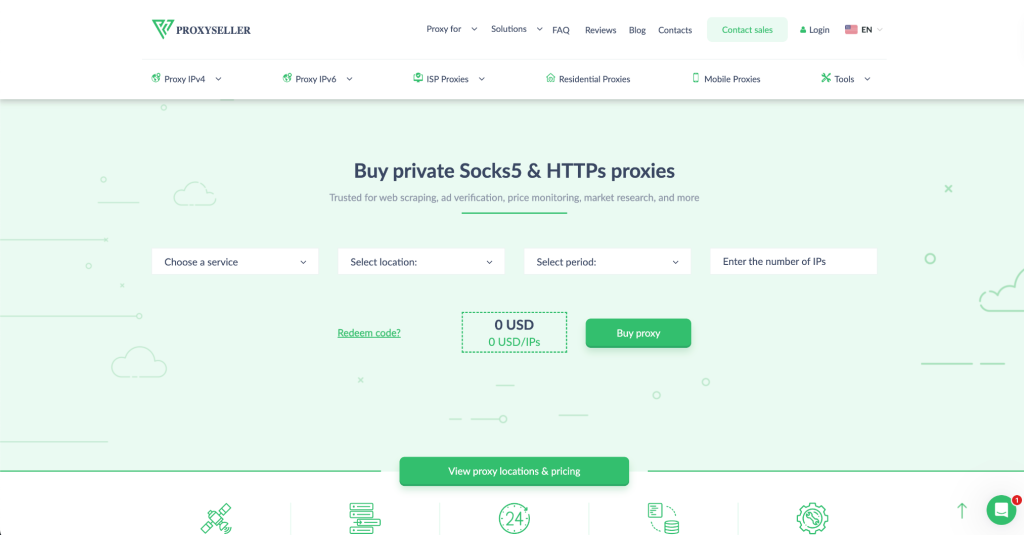
Proxy-Seller has been running proxy infrastructure since 2014. It covers all five proxy types (residential, ISP, datacenter IPv4/IPv6, and mobile) under a single account. No other provider on this list offers dedicated IPv6, which starts at $0.16/IP.
Decodo doesn't offer a dedicated IPv6 product. Proxy-Seller adds dedicated IPv6 IPs that useful when target sites resolve over IPv6 and per-GB residential pricing would burn budget at high concurrency.
What makes Proxy-Seller stand out
The dedicated pools are what most teams notice once they're running in production. No cross-customer traffic mixing means your block rates reflect your own behavior on the target and not someone else's. In A/B pilots on high-friction targets like SERP and marketplace endpoints, teams report +20-30% VRR uplift. Cost per valid response drops by ~20-35%.
The support model is worth pointing out too. Named account manager access from $1K MRR isn't something you typically see at this price point: most providers save that for $10K+ accounts. Direct Slack and Telegram support, compliance documentation from day one, and a 4.8-star G2 rating round it out.
What Proxy-Seller proxies cost
Residential: from $3.50/GB
ISP: from $3/IP
Datacenter: IPv4 from $1.64/IP and IPv6 from $0.16/IP
Dedicated mobile proxies: from $49/month
Shared mobile proxies: from $20/month
Wholesale from 1TB (residential), 1,000 units (ISP and datacenter), 5-10 units/month (mobile); larger volumes are priced individually
Which teams get the most from Proxy-Seller
Mid-market data engineering teams that have hit the ceiling on block rates or support response times with a shared-pool provider. The dedicated pool setup and named account manager model here are the practical fix.
Bright Data: Decodo alternative for compliance-heavy enterprise teams
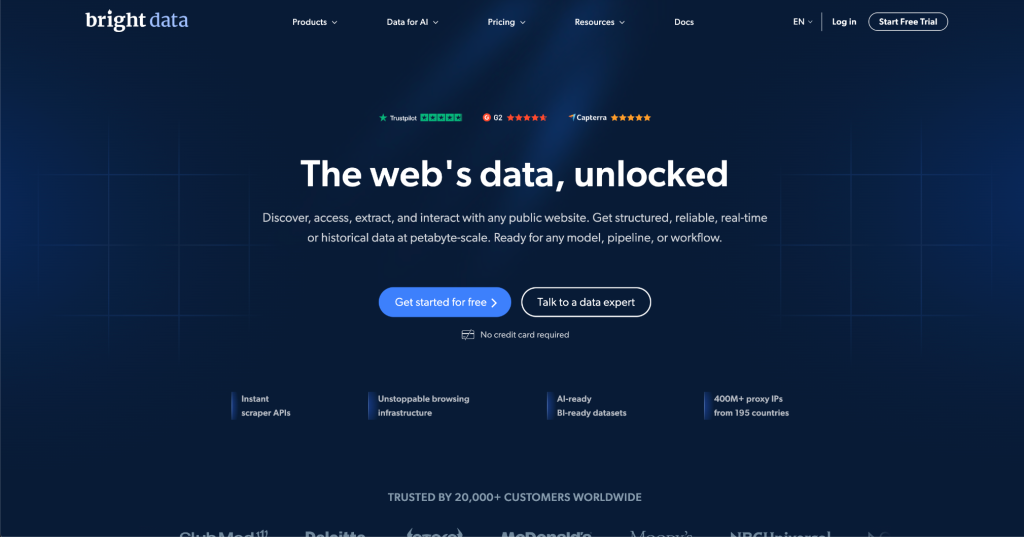
Bright Data is a major player in the proxy market, used by 20,000+ organizations, including Fortune 500 companies. The network covers residential, datacenter, ISP, and mobile proxies, with a full data collection suite on top: scraping APIs, a Web Unlocker, a Scraping Browser, a SERP API, and pre-built downloadable datasets.
Decodo's self-serve model works well at mid-market scale, but its scraping tools are narrower in scope. If your team has outgrown raw IP access or needs a compliance audit trail that goes beyond ISO 27001, Bright Data is the natural next step.
What makes Bright Data stand out
The compliance stack is what sets it apart for enterprise buyers. ISO 27001, SOC 2, SOC 3, and CSA STAR Level 1 covers the documentation requirements of most enterprise procurement and legal reviews. For security or legal teams that have to sign off on the vendor, it's the strongest audit trail on this list.
What Bright Data proxies cost
Residential: from $7.00/GB (subscription) / $8.00/GB (PAYG)
Datacenter: from $0.51/GB (subscription) / $0.60/GB (PAYG)
ISP: from $1.80/IP (subscription) / $8/GB (PAYG)
Subscription plans start at $499/month
Volumes above 1TB are custom-priced
Enterprise contracts include custom SLAs and committed spend minimums
Which teams get the most from Bright Data
Enterprise data engineering teams that need full compliance documentation and a data platform that goes beyond raw proxy access: SEO monitoring, price intelligence, ad verification, and market research at very high volumes.
If you're considering other Tier-1 options, check our Bright Data alternatives guide for the closest comparisons.
Skip the 4-week procurement cycle. Proxy-Seller delivers DPA, SCC, and ethical-sourcing documentation from $1K MRR with a same-day sandbox. No $10K minimum, no 4–8 week sales cycle, named account manager from day one. Start your $1.99 trial
Oxylabs: high-volume proxy infrastructure for large scraping projects
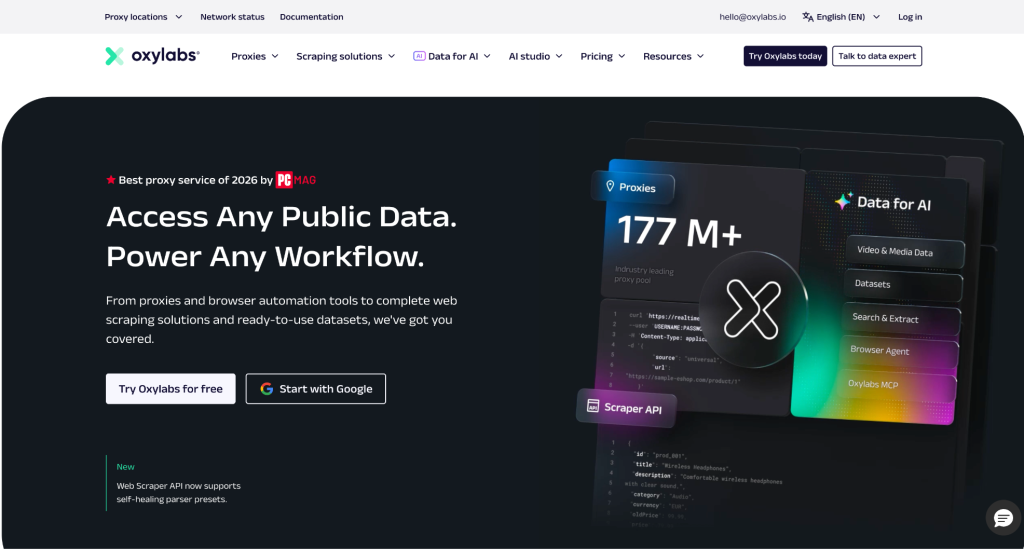
We looked at Oxylabs closely for teams that kept hitting Decodo's ceiling at high concurrency. The numbers check out: 175M+ IPs, 99.90% global average success rate (according to Proxyway benchmarks), ISO 27001 and SOC 2 certified, and Lloyd's insurance on top of that.
One thing that's easy to miss: Oxylabs isn't trying to be Bright Data. Bright Data built a whole platform around its proxy network: datasets, APIs, collection tools. Oxylabs kept it focused. The infrastructure is the product. Clean pools, ZIP and ASN-level geo-targeting, and compliance documentation that actually clears enterprise procurement without a six-week back-and-forth.
What makes Oxylabs stand out
Before any IP hits active rotation, it gets filtered by latency, bandwidth, and historical performance. That's what keeps the success rate consistent on targets like Google, Amazon, and marketplace endpoints. The Web Scraper API adds JavaScript rendering, CAPTCHA, and OxyCopilot AI for teams that need managed extraction without maintaining the tooling themselves.
What Oxylabs proxies cost
Residential: from $6/GB (Starter, 5GB/month) to $2.50/GB (Corporate, 1TB/month)
PAYG residential: $4/GB (no monthly commitment)
Datacenter: from $1.20/IP
ISP: from $1.60/IP
Mobile: from $7.50/GB (Starter plan)
Enterprise plans above 1TB are custom-priced
Which teams get the most from Oxylabs
High-volume data engineering teams where success rate under load is the metric that matters. The premium is justified at scale. Below 10GB a month, you're paying for infrastructure you won't use.
IPRoyal: Decodo alternative for non-expiring residential traffic
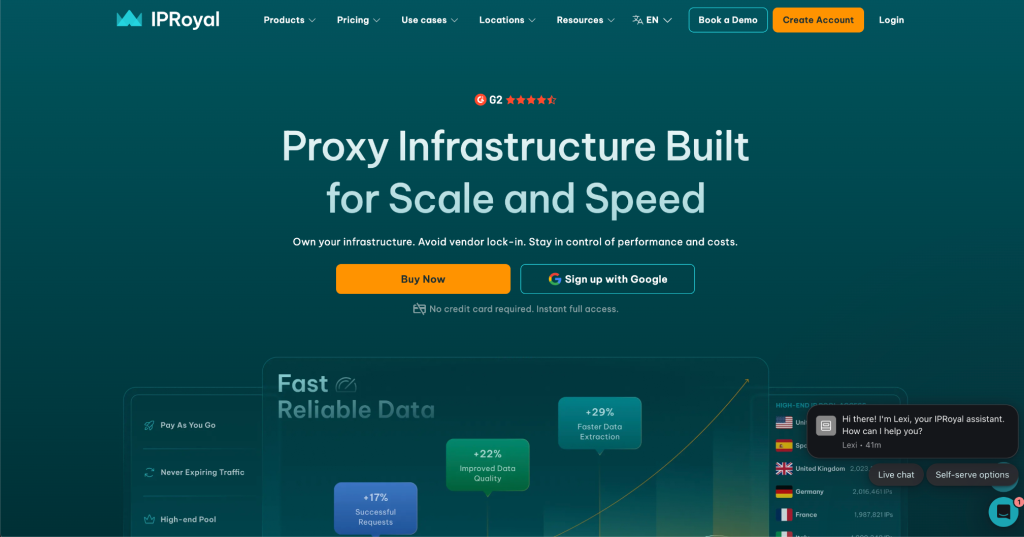
IPRoyal solves one specific problem better than anyone else on our Decodo alternatives list: bandwidth that doesn't expire. Buy 50GB in January, use 20GB, and the remaining 30GB will sit in your account until you need it in February. No monthly reset, no pressure to burn through traffic before the billing cycle ends.
What makes IPRoyal stand out
The pricing model is the main draw. Entry rate is $7/GB at 1GB: high, but it drops to $1.75/GB at 500GB with no minimum spend or mandatory subscription. No other provider on this list combines that volume discount with non-expiring traffic. The sourcing runs through Pawns.app, where real users opt in to share bandwidth in exchange for earnings.
What IPRoyal proxies cost
Residential: from $7/GB (1GB) to $1.75/GB (500GB); traffic never expires
Datacenter: from $1.57/IP/month
ISP: from $2.70/IP/month
Mobile: from $130/month
Which teams get the most from IPRoyal
Teams with irregular or seasonal workloads where unused bandwidth is a recurring cost. SERP monitoring, price intelligence, or ad verification at variable volume where Tier-1 pool depth isn't the priority.
Check our list of IPRoyal alternatives if you're looking for similar options.
Webshare: no-commitment entry point among Decodo alternatives
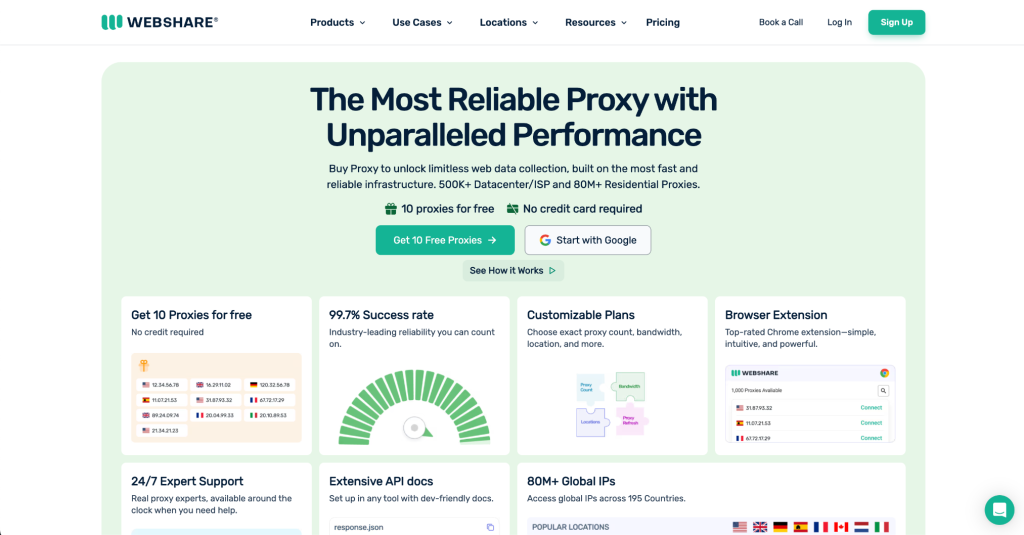
Webshare is the easiest provider on this list to start with. No credit card. No KYC. No sales call. The free plan gives you 10 datacenter proxies and 1GB per month, permanently.
We've seen teams use it to validate a scraping setup before committing any budget. It works well for that. The paid tiers cover 500,000+ datacenter IPs across 50+ countries and an 80M+ residential pool, with per-IP rates that undercut most mid-market options at scale.
What makes Webshare stand out
The datacenter pricing is the main draw. Cheap at volume, clean API, self-serve dashboard with no support contact needed to get going. The self-published success rate sits at 99.97% for datacenter proxies.
The gaps matter though. No mobile proxies. No dedicated account manager. The 80M+ residential pool runs smaller than Bright Data or Oxylabs, which shows on high-friction targets. Teams that hit that ceiling usually move to a provider with deeper pools.
What Webshare proxies cost
Free plan: 10 datacenter IPs, 1GB/month, no expiry, no credit card
Rotating residential: from $3.50/GB; annual billing reduces this further
Datacenter from $2.99/month (100 proxies); volume discounts up to 40%
Static residential (ISP): from $0.30/IP
Annual billing saves approximately 30% across all paid plans
Which teams get the most from Webshare
Developers and smaller teams that need to test before they spend. The free tier makes the first step easy.
Running at volume? Get wholesale pricing. Proxy-Seller's residential proxies start at $3.50/GB with stackable discounts up to 40% at 1TB+. Named account manager included from $1K MRR. Request wholesale pricing.
DataImpulse: the lowest-cost residential access
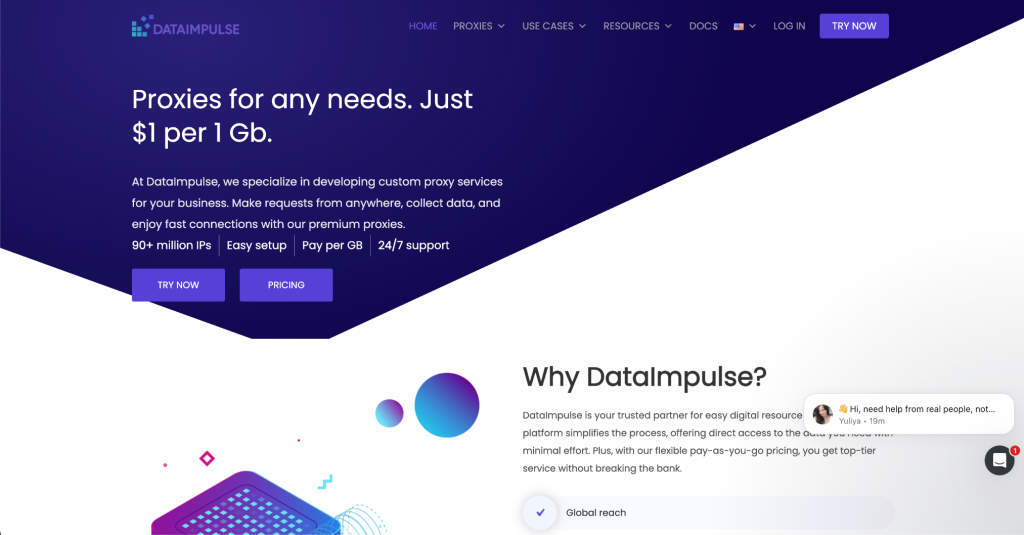
DataImpulse does one thing better than anyone else on this Decodo alternatives list: lower cost per GB. At $1/GB flat with no subscription requirement, it undercuts every other provider here. IPRoyal also offers non-expiring traffic, but starts at $7/GB for small volumes. That's a 7x difference at the entry level.
Credits never reset either. Whatever you don't use stays on your account. For teams with irregular or low-volume workloads, that combination of flat pricing and no expiry is hard to argue with.
What makes DataImpulse stand out
The $5 minimum top-up is the lower barrier to entry on this list. No sales call, no KYC, no subscription floor. The 90M+ first-party IP pool covers 195 countries with city, ZIP, and ASN-level targeting.
However, precision targeting gets billed at 2x the standard rate. For example, at $1/GB standard, targeting a specific city doubles that to $2/GB. That's the same rate as Decodo's 1TB plan, without Decodo's pool depth.
What DataImpulse proxies cost
Residential: $1/GB (flat rate); $0.80/GB at 1TB+
Datacenter: $0.50/GB; $0.45/GB at 1TB+
Mobile: $2/GB
Premium residential: $5/GB (higher success rate pool)
Minimum entry spend is $5
A 7-day money-back guarantee applies on first purchases, provided less than 80% of traffic has been consumed
Which teams get the most from DataImpulse
Teams collecting public web data where cost per GB is the primary constraint and workloads are variable. Not the right fit for procurement-gated enterprise buyers or teams running primarily on high-friction targets.
SOAX: Decodo alternative for IP quality and rotation depth
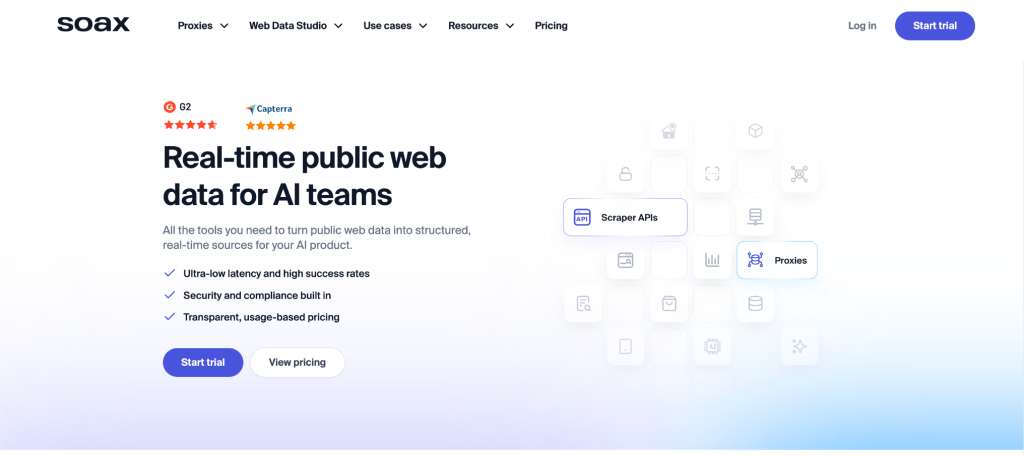
SOAX has the largest pool on this list at 191M+ across 195+ countries. All four proxy types run under one subscription. For teams managing separate residential, mobile, ISP, and datacenter budgets, that alone simplifies things.
Decodo runs 115M+ residential IPs. SOAX runs 155M+. The gap matters on high-friction targets where IP freshness affects block rates.What makes SOAX stand out
Many proxies give you pool access and stop there. SOAX filters and audits its network continuously. Flagged or overused IPs get pulled before they hit active rotation. That's what keeps success rates consistent on targets that punish stale addresses.
What SOAX plans cost
Starter: $90/month (25GB, $3.60/GB)
Advanced: $170/month (50GB, $3.40/GB)
Professional: $740/month (300GB, $2.46/GB)
Business: $1600/month (800GB, $2.00/GB)
All plans include residential, mobile, ISP, and datacenter proxies plus Web Data API under a single data allowance
What teams get the most from SOAX
Teams running high-concurrency scraping on high-friction targets where IP freshness is the actual bottleneck. Also a good fit for teams that want all four proxy types under one plan instead of managing separate budgets.
Choosing the right Decodo alternatives for your setup
For most mid-market teams, Proxy-Seller is the best Decodo alternative. Dedicated pools mean your block rates aren't being influenced by other customers. Named account manager access from $1K MRR. Compliance documentation ready before you ask for it.
If Decodo's bandwidth reset is costing you at month-end, IPRoyal and DataImpulse both run on non-expiring traffic and no subscription floor: IPRoyal at $1.75/GB at 500GB, DataImpulse at $1/GB flat from the start. If the per-GB rate stops making sense at volume, Proxy-Seller's stackable discounts go up to 40% at 1TB+, and SOAX drops to $2/GB at 800GB/month.
If your procurement team needs a full enterprise audit trail, Bright Data or Oxylabs are the ones to look at. Webshare is the starting point for smaller teams testing before they commit budget. SOAX is worth a look if you want residential and mobile under one subscription.
Ready to move off Decodo?Start a $1.99 trial with Proxy-Seller, or request wholesale pricing if you're running at volume
Frequently asked questions about Decodo alternatives
Is Proxy-Seller a good Smartproxy alternative?
It's the one we'd recommend for most mid-market teams making that switch. Five proxy types, dedicated pools, no cross-customer traffic mixing. Block rates on high-friction targets like SERP and marketplace endpoints drop because your pool isn't shared with other customers. For a like-for-like move away from Decodo, it's the strongest option on this list.
Do any Decodo alternatives offer non-expiring bandwidth?
Two providers: IPRoyal and DataImpulse. Whatever bandwidth you buy stays on your account until you use it. No monthly reset, no pressure to burn through traffic before the billing cycle ends. IPRoyal hits $1.75/GB at 500GB; DataImpulse runs $1/GB flat from the start. Both make sense for workloads that don't run on a predictable monthly schedule.
Which Decodo alternatives offer the best value for mid-market teams?
Proxy-Seller. Dedicated pools mean your block rates reflect your own scraping behavior, not someone else's on the same infrastructure. Named account manager access starts at $1K MRR, which isn't something you typically see at this price point. Stackable volume and duration discounts, plus compliance documentation including DPA, AUP, and ethical sourcing certificates ready from day one. No enterprise minimum to clear or a six-week procurement process to get through before you can run a test.
Is proxy use legal or illegal?
Legal, in most places, for most use cases. Collecting publicly available data for price monitoring, SERP tracking, or ad verification is standard practice. Where it gets complicated is personal data under GDPR or CCPA, or accessing systems that require a login. Every provider on this Decodo alternatives list publishes an AUP. Verify your specific use case against it before deploying at scale.
What should I look for when choosing a proxy provider for my business?
Five things: proxy type coverage, pool size and IP freshness, pricing model fit for your workload, success rates on the targets you actually scrape, and compliance documentation. The last one catches teams off guard at procurement review more often than you'd expect. At scale, named account manager access and direct support channels matter too. We also recommend our article on the best proxy providers.